


Introduction: The New Benchmark for Hospital Excellence
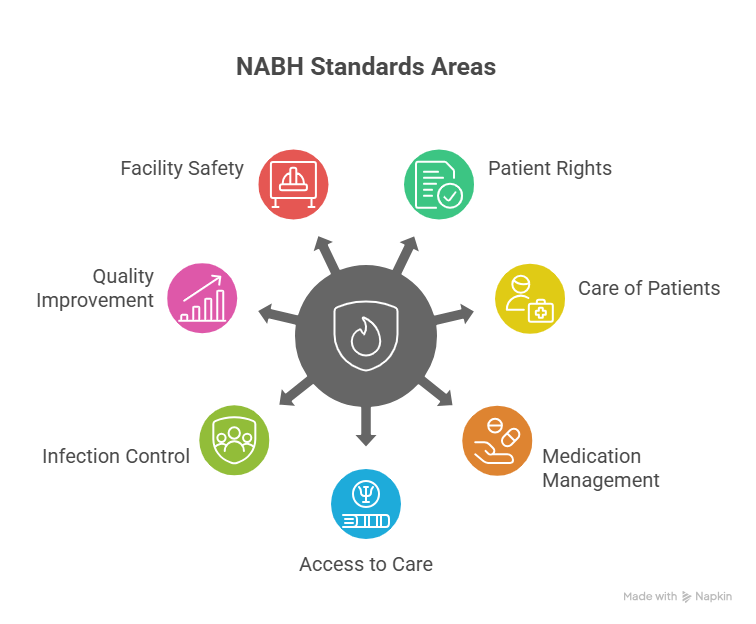
Hyderabad’s healthcare landscape is evolving rapidly. Once celebrated primarily for its IT industry, the city is now a trusted hub for advanced medical care, housing multi-specialty hospitals, specialized institutes, and a growing medical tourism sector. From Banjara Hills to Kukatpally and Dilsukhnagar, hospitals are competing not just on cost or convenience but on quality, patient safety, and operational excellence.
Yet, a critical question persists: How can hospitals demonstrate that their services meet the highest standards of care? The answer lies in NABH accreditation — the gold standard for hospital quality and patient safety in India.
For hospitals in Hyderabad and across Telangana, pursuing NABH accreditation is no longer optional. It strengthens credibility, inspires patient confidence, and aligns hospitals with national and global best practices. This article explores why every hospital should prioritize NABH accreditation, how it drives quality transformation, and the practical steps to achieve it efficiently.
- Misunderstanding CE Class IIa Certification Requirements
One of the most frequent missteps is underestimating the specific requirements for CE Class IIa certification under MDR. Many manufacturers mistakenly assume that CE marking follows a generic, one-size-fits-all checklist.
Key Points:
- CE marking varies by device classification and risk level.
- Class IIa devices require a conformity assessment by a Notified Body.
- Manufacturers must demonstrate safety and performance across the entire product lifecycle.
Solution: Thoroughly review MDR 2017/745 and consult with regulatory experts to fully understand the CE Class IIa certification process.
- Why NABH Accreditation Matters for Hyderabad Hospitals
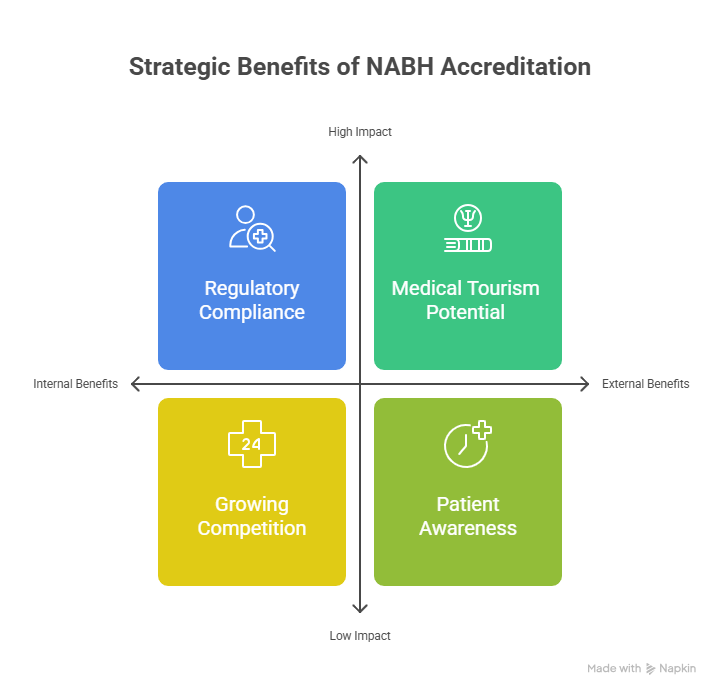
Hyderabad has emerged as a major healthcare hub, serving not only Telangana but also neighboring states. The city hosts a diverse range of facilities, from large tertiary centers to small and mid-sized hospitals. In such a competitive environment, NABH accreditation offers a decisive edge.
Key reasons for its importance include:
- Growing Competition: NABH accreditation differentiates hospitals by showcasing superior quality and safety.
- Patient Awareness: Informed patients actively seek hospitals that prioritize transparency and safety.
- Insurance Empanelment: Many insurers and government schemes prefer or require NABH-accredited hospitals.
- Medical Tourism Potential: Accreditation enhances trust among domestic and international patients.
- Regulatory Compliance: Accreditation ensures adherence to local, national, and international healthcare norms.
In short, NABH accreditation is a strategic enabler for hospitals aiming to lead with quality, trust, and sustainable growth.
- Key Benefits of NABH Accreditation
a.Enhanced Patient Safety and Clinical Quality
NABH accreditation establishes strict protocols for infection control, medication safety, and emergency preparedness. Hospitals learn to anticipate risks, reducing medical errors and enhancing patient outcomes.
b.Operational Efficiency
Accredited hospitals develop streamlined processes, standardized documentation, and clear accountability across departments. This structure minimizes delays and improves service delivery, benefiting both staff and patients.
c.Improved Reputation and Credibility
NABH serves as a mark of trust. Hospitals gain enhanced public perception, attracting skilled professionals, partnerships, and higher patient volumes
d.Better Staff Morale and Training
Continuous education and skill development are central to NABH. Staff become more confident and motivated when they operate in a structured, quality-driven environment
e.Financial and Strategic Advantages
Accredited hospitals often enjoy higher patient retention, smoother insurance processes, and eligibility for government schemes. Operational transparency also facilitates better cost management and audit readiness
f.Global Recognition
NABH is recognized by the International Society for Quality in Healthcare (ISQua), giving hospitals a global seal of excellence and opening doors for international collaborations.
- The NABH Accreditation Process: Step-by-Step
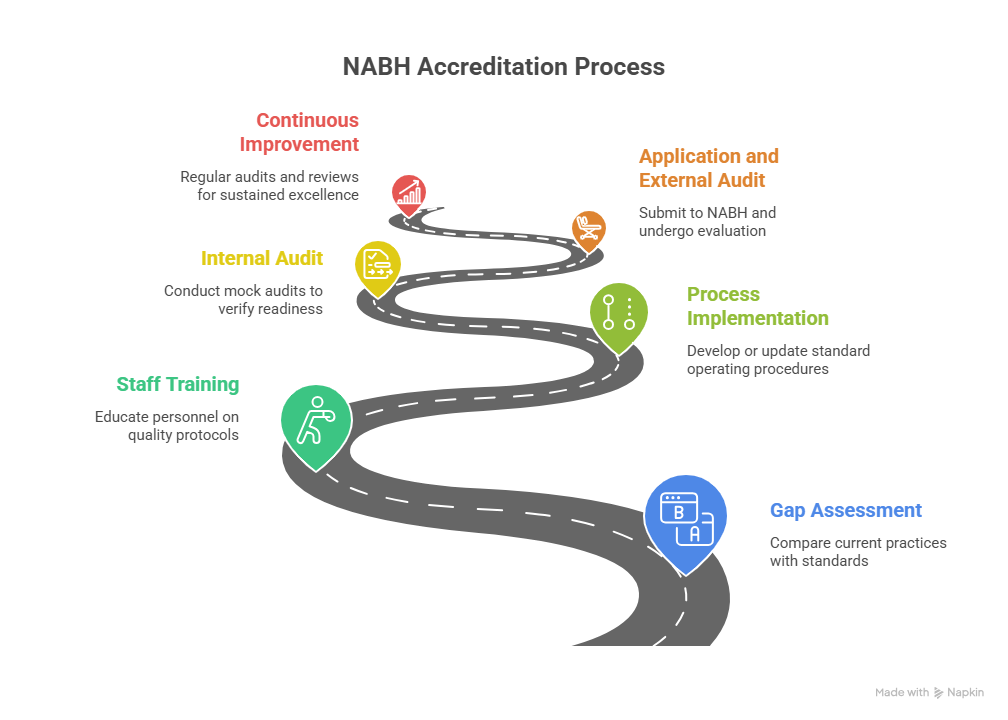
Achieving accreditation becomes manageable when approached systematically:
- Gap Assessment: Compare current practices with NABH standards and identify areas for improvement.
- Staff Training: Educate all personnel on quality protocols and compliance requirements.
- Process Implementation: Develop or update standard operating procedures, documentation systems, and reporting mechanisms.
- Internal Audit: Conduct mock audits to verify readiness before the formal assessment.
- Application and External Audit: Submit to NABH and undergo evaluation by certified auditors.
- Continuous Improvement: Accreditation is an ongoing journey — regular audits and reviews ensure sustained excellence.
Even mid-sized and small hospitals in Hyderabad have achieved accreditation successfully, demonstrating that size or budget is not a barrier when leadership is committed.

- Overcoming Common Challenges
Many hospitals hesitate due to perceived hurdles. Common concerns include:
- Awareness or Expertise: Smaller hospitals may struggle to interpret standards. Expert consultants can simplify the process.
- Resistance to Change: Staff may be hesitant, but engagement, training, and leadership support turn resistance into ownership.
- Resource Constraints: Phased implementation and prioritization make accreditation attainable even for smaller facilities.
- Documentation Overload: Clear templates and assigned responsibilities streamline record-keeping.
With careful planning, these challenges become opportunities for systematic improvement
- Case Studies: Hyderabad Hospitals Leading the Way
Several hospitals in Hyderabad and Telangana showcase the transformative power of NABH:
- Multispecialty Hospital, Banjara Hills: Improved patient satisfaction by 40% within a year by strengthening communication and safety protocols.
- 100-Bed Hospital, Warangal: Reduced medication errors by 60% through compliance with NABH documentation and audits.
- Diagnostic Center Chain, Hyderabad: Accelerated reporting turnaround times by standardizing results verification processes.
These examples highlight measurable improvements in quality, efficiency, and patient trust.
- The Future of Quality Healthcare in Telangana
Telangana is promoting hospital accreditation to elevate healthcare standards. Programs like Ayushman Bharat and other public-private initiatives increasingly favor NABH-accredited hospitals.
As Hyderabad positions itself as a medical tourism destination, accreditation provides a distinct competitive edge. The city’s healthcare future emphasizes patient-centric, technology-driven care — a vision strongly aligned with NABH standards.
- How to Get Started: A Practical Roadmap
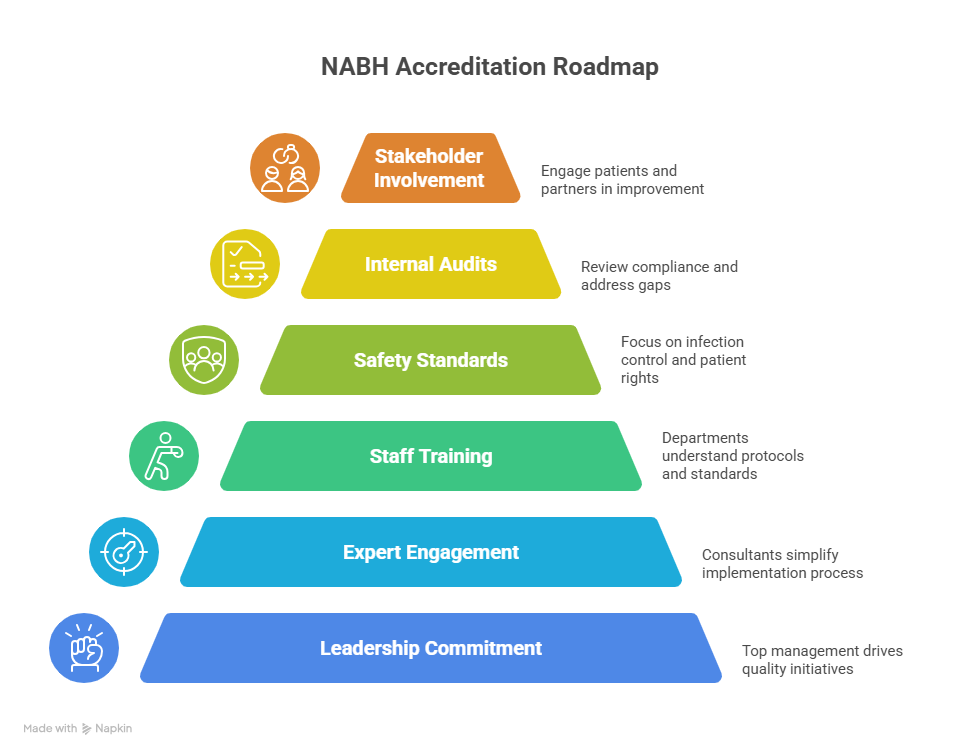
Hospitals planning accreditation can follow a straightforward roadmap:
- Secure Leadership Commitment: Quality initiatives succeed when driven by top management.
- Engage Experts: NABH consultants or quality professionals can simplify implementation.
- Train Staff: Ensure all departments understand protocols and standards.
- Prioritize Safety Standards: Begin with infection control, emergency management, and patient rights.
- Conduct Internal Audits: Regularly review compliance and address gaps.
- Involve Stakeholders: Engage patients, staff, and partners in continuous quality improvement.
Even small hospitals can achieve accreditation with careful planning and commitment.
Conclusion: Accreditation as a Commitment to Excellence
NABH accreditation is more than a certificate — it’s a commitment to excellence. Hospitals in Hyderabad and Telangana that embrace it position themselves for sustainable growth, patient trust, and operational efficiency.
When a hospital displays the NABH logo, it signals:
“Your safety matters. Your rights matter. Your care is our priority.”
For hospitals yet to begin their NABH journey, the time is now. Start with an internal audit, engage your team, and take the first step toward recognized excellence and lasting credibility.
📞 Contact us at support@virtrigo.com to book your free consultation and for your business compliant.


