In today’s digital-first economy, cybersecurity is no longer optional—it’s essential. As Hyderabad cements its status as one of India’s leading IT hubs, local tech companies are increasingly under pressure to meet global standards in information security. One such standard, ISO 27001, helps businesses implement a robust Information Security Management System (ISMS). This guide outlines a clear, actionable roadmap for ISO 27001 implementation tailored to IT firms in Hyderabad.
What is ISO 27001 and Why is it Crucial for Hyderabad’s IT Sector?
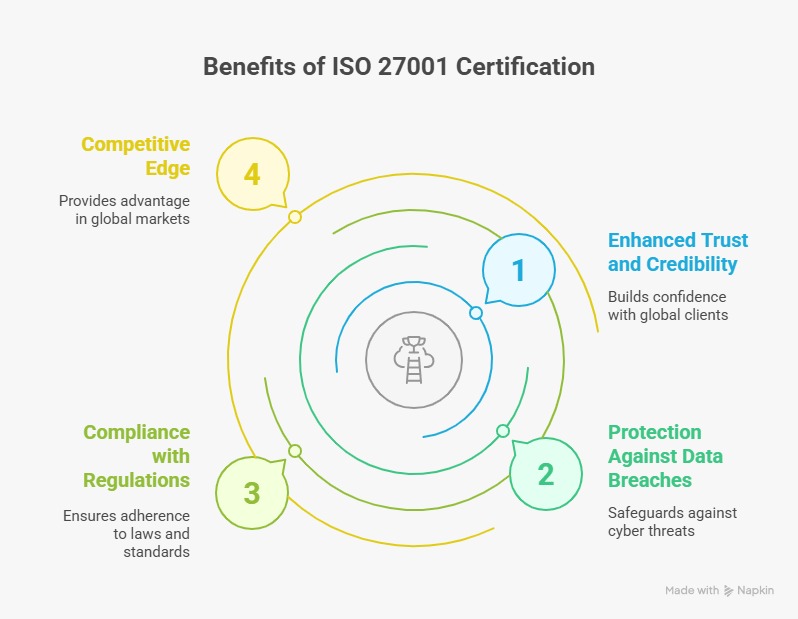
ISO 27001 is an internationally recognized standard that outlines the requirements for establishing, implementing, maintaining, and continuously improving an ISMS. For Hyderabad-based IT companies, this certification offers:
- Enhanced trust and credibility with global clients
- Protection against data breaches and cyber threats
- Compliance with Indian laws (e.g., CERT-In) and international regulations (e.g., GDPR)
- Competitive edge in global tenders and partnerships
The 2022 update to ISO 27001 includes modernized control structures, making it even more relevant in today’s threat landscape.
Read more at CERT-In Reporting Guidelines
Step 1: Plan Your ISO 27001 Implementation
Appoint a Project Lead
Designate a responsible individual—typically a CISO or compliance officer—to manage the project.
Set a Budget and Timeline
- Estimated Cost: ₹1.5–₹5 lakhs depending on scope
- Timeline: 3–6 months for small to mid-sized companies
Secure Executive Buy-In
Top-level management must understand and support the initiative for it to succeed.
Pro Tip:
Partner with local ISO consultants like Veave, MaxPro, or Certvalue to streamline your implementation process.
Step 2: Define the Scope of Your ISMS
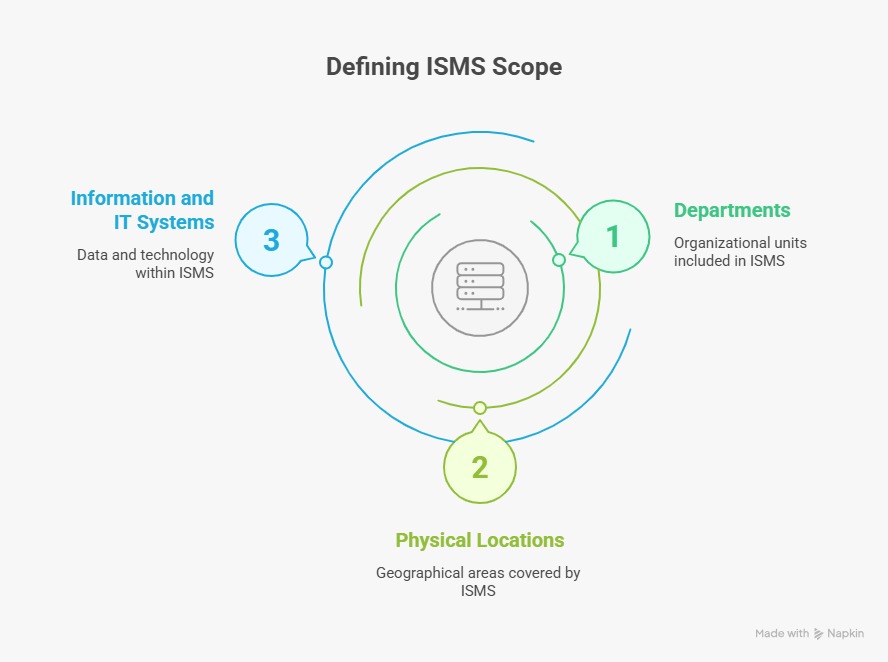
Define which departments, systems, and locations your ISMS will include.
Scope Considerations:
- Departments (e.g., DevOps, HR, Customer Support)
- Physical locations (e.g., Gachibowli headquarters, remote offices)
- Types of information and IT systems
Example:
A SaaS company in HITEC City limited its ISMS scope to development and production systems to fast-track certification.
Step 3: Perform Risk Assessment and Gap Analysis
Risk Assessment
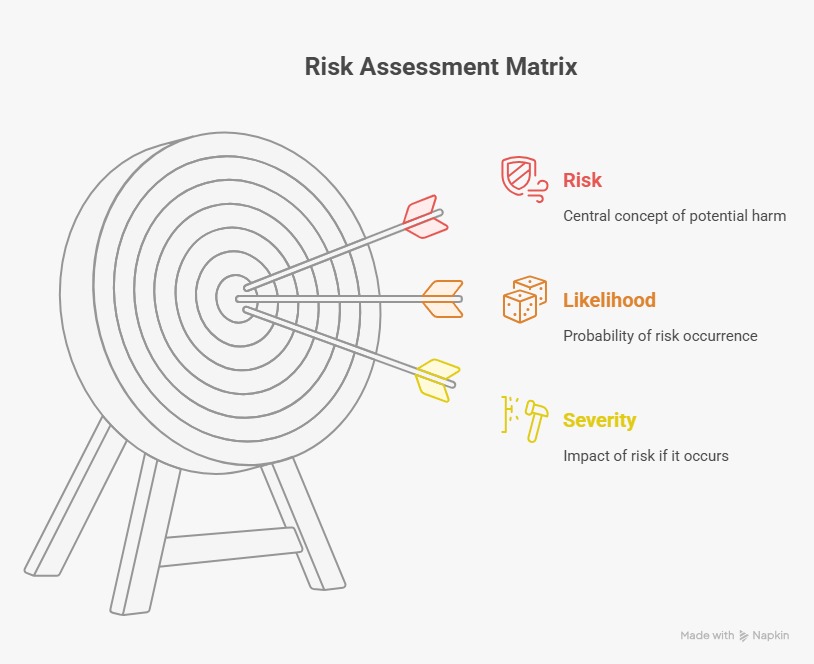
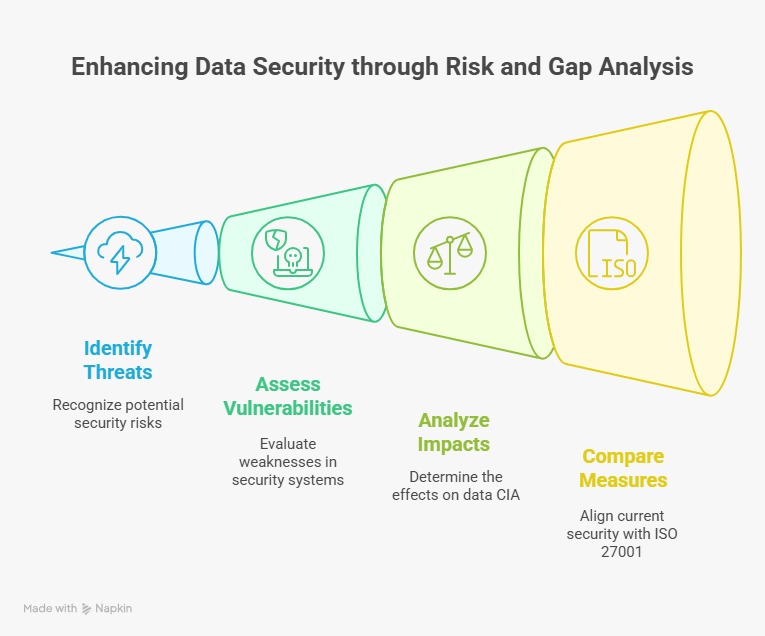
Identify threats, vulnerabilities, and impacts on the Confidentiality, Integrity, and Availability (CIA) of your data.
Gap Analysis
Compare your current security measures against ISO 27001 requirements.
Key Deliverables:
- Risk register
- Risk treatment plan
- Gap analysis report
Tools: local consultants can expedite this phase.
Step 4: Implement ISO 27001 Controls and Policies
The 2022 version of ISO 27001 introduces 93 controls across four domains:
- Organizational
- People
- Physical
- Technological
Essential Controls for IT Firms:
- Access Control: Role-based permissions for internal systems
- Encryption: Secure client and internal data
- Asset Management: Maintain an updated inventory of IT assets
- Vendor Management: Evaluate third-party security practices
Documentation to Prepare:
- Information Security Policy
- Statement of Applicability (SoA)
- Risk Treatment Plan
Tip: Companies like InfosecTrain and TopCertifier offer tailored templates and support.
Step 5: Conduct Employee Training and Internal Audits
Awareness Training
All employees must be trained on:
- Basics of ISO 27001
- Data protection best practices
- Recognizing phishing and social engineering threats
Internal Audit Preparation:
- Perform a mock audit
- Use checklists to validate controls
- Interview relevant staff and collect evidence
Tools: Use Confluence for documentation and Jira for tracking remediation tasks.
Step 6: Undergo the Certification Audit
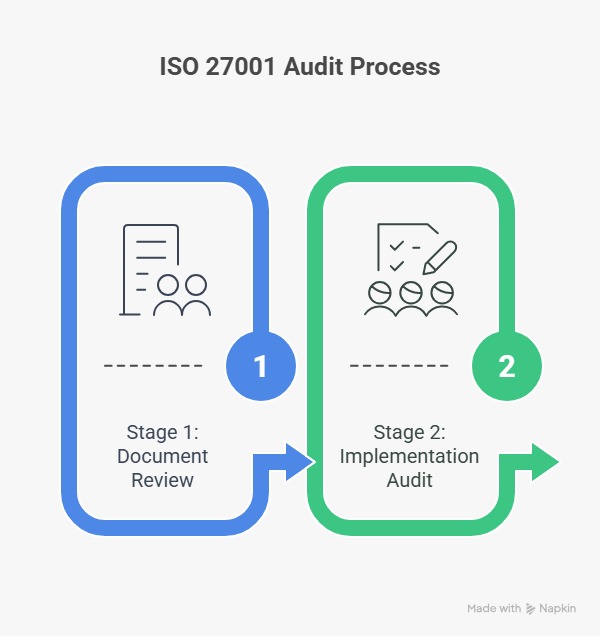
The audit process is conducted in two stages:
Stage 1: Document Review
Auditors assess whether your ISMS documentation meets ISO standards.
Stage 2: Implementation Audit
Auditors evaluate how well your controls work in practice.
Choose a Trusted Certification Body:
Timeline: Approximately 2–4 weeks
Step 7: Maintain Certification Through Continuous Improvement
ISO 27001 is a continuous commitment, not a one-time event.
Post-Certification Activities:
- Annual surveillance audits
- Periodic policy reviews
- Regular employee training
Continuous Improvement:
Use the Plan-Do-Check-Act (PDCA) cycle to refine your ISMS over time.
KPI Suggestions:
- Incident response metrics
- Patch management timelines
- Audit findings resolution rate
Read more at ISO 27001 Templates and Tools
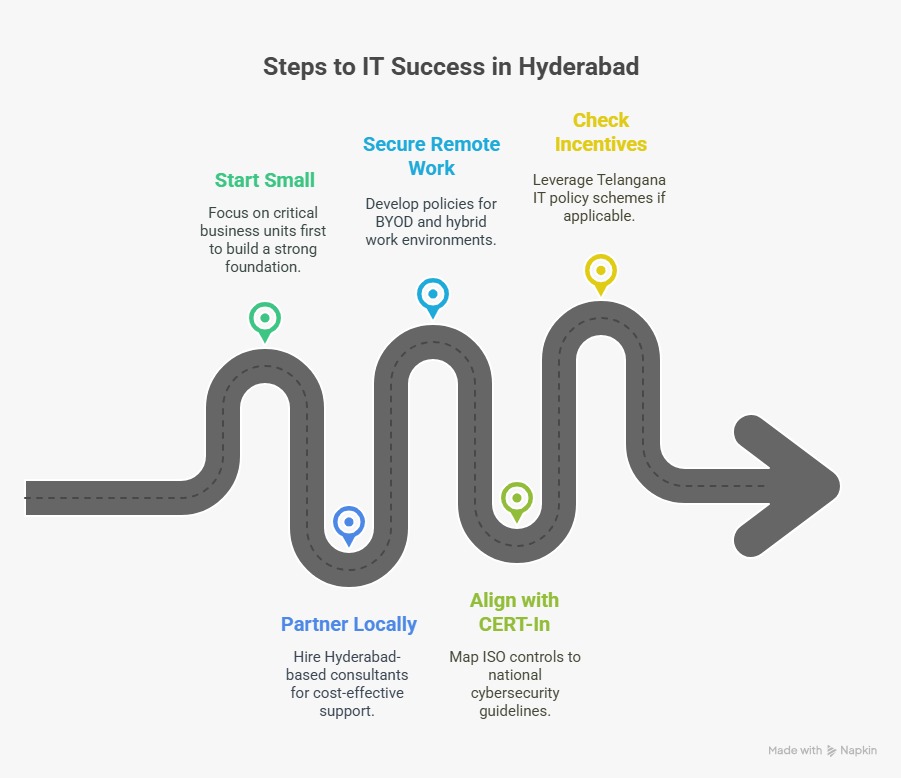
Tips for IT Companies in Hyderabad
- Start small: Focus on critical business units first
- Partner locally: Hire Hyderabad-based consultants for cost-effective support
- Secure remote work: Develop policies for BYOD and hybrid work environments
- Align with CERT-In: Map ISO controls to national cybersecurity guidelines
- Check for incentives: Leverage Telangana IT policy schemes if applicable
Conclusion: Start Your ISO 27001 Journey Today
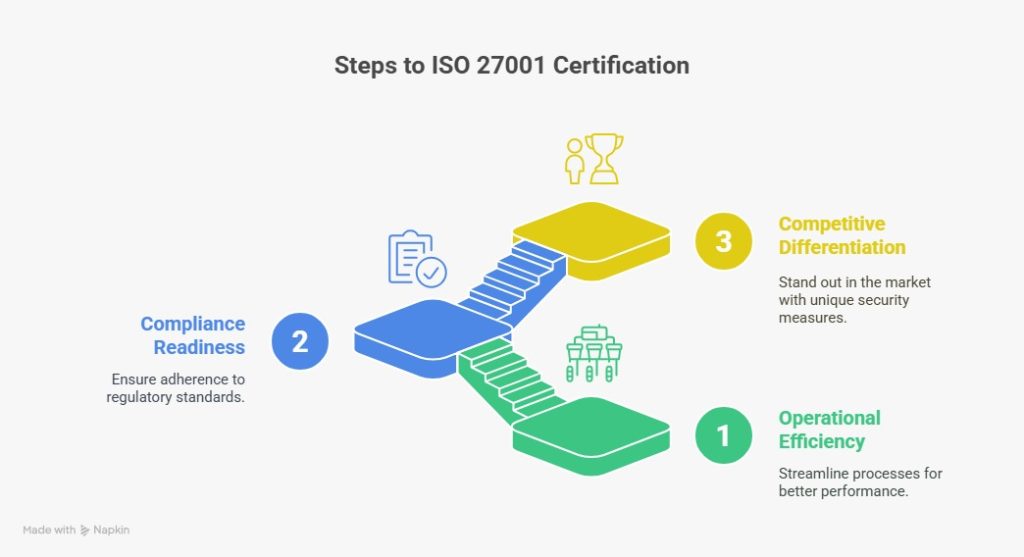
Achieving ISO 27001 certification sends a clear message: your company takes information security seriously. For IT firms in Hyderabad, it’s a smart investment that delivers operational efficiency, compliance readiness, and competitive differentiation.
To know more about ISO 27001 assessment, schedule a consultation with a certified expert at support@virtrigo.com to get started.