


Executive Summary
This report provides an in-depth analysis of the transformative growth of Global Capability Centers (GCCs) in India, with a specific focus on Hyderabad’s rapid emergence as a leading global hub. It details the strategic evolution of GCCs from mere cost centers to pivotal engines of innovation and value creation for multinational corporations. The analysis culminates in a strategic content proposal for a video, including a title, description, hashtags, and tags, optimized for discoverability and engagement, reflecting Hyderabad’s unique advantages and significant economic impact.
GCCs are evolving into strategic hubs for innovation, AI/GenAI development, and digital transformation, moving beyond traditional cost arbitrage.1 India remains the dominant global destination for GCCs, hosting over 53% of the world’s centers, with a projected growth to 2,100 by FY28.3 Hyderabad is rapidly closing the gap with Bengaluru, becoming India’s second-largest and fastest-growing GCC destination, currently home to 273 centers, accounting for 16% of India’s total.3 The city’s appeal is driven by a robust talent pool, world-class infrastructure, proactive government policies, and lower operating costs compared to other Tier-1 cities.3 Recent major investments from global giants such as Costco, Citizens Financial Group, and GlobalLogic underscore Hyderabad’s growing strategic importance across diverse sectors.8 These centers are significant contributors to Telangana’s economy, driving job creation, skill development, urban infrastructure enhancement, and overall Gross State Domestic Product (GSDP) growth.13

The Evolving Role of Global Capability Centers (GCCs)
Shift from Cost Centers to Innovation and Value Hubs
Historically, Global Capability Centers (GCCs) were established primarily with an emphasis on labor affordability and cost reduction for multinational corporations. These offshore units functioned largely as back-office operations, providing support services at a lower cost compared to Western markets.1 However, this paradigm has undergone a significant transformation. By 2025, GCCs are anticipated to be “entirely distinct” entities, progressively driving innovation and assisting businesses in maintaining productivity on a global scale.1
The contemporary objective of new GCC development extends far beyond mere cost-effectiveness. The focus has decisively shifted towards generating substantial value, particularly through initiatives in digital transformation, the launch of new products, and advanced data analysis.2 This evolution is further evidenced by companies increasingly choosing to bring previously outsourced functions back in-house to their GCCs. These functions now include critical areas such as application development, cloud engineering, cybersecurity, and comprehensive digital transformation efforts.1 This movement reflects a strategic imperative driven by the need for deeper ownership of core functions, direct access to specialized talent, and enhanced control over intellectual property and strategic digital initiatives. This signifies a fundamental transition from transactional cost-saving models to strategic capability building within the enterprise.
Key Functions and Talent Focus (AI, GenAI, Digital Transformation)
The global business landscape is marked by intense competition for specialized expertise, particularly in fields such as data science, cloud computing, cybersecurity, artificial intelligence (AI), and Generative AI (GenAI). GCCs are strategically positioned to provide access to these vast and highly sought-after talent pools.1 A notable trend is the establishment of new GCCs specifically to house GenAI development teams, implement AI-driven automation, and leverage AI for advanced data insights that directly inform core business strategy.2
The primary focus areas for talent within these centers include software engineering, AI and data science specialists, administrators for Enterprise Resource Planning (ERP) and Customer Relationship Management (CRM) systems, network operations specialists, and professionals skilled in activatable technologies designed to improve customer interaction.1 Beyond IT, the sectoral expansion of GCCs is evident. Manufacturing GCCs, for instance, are actively embracing Industry 4.0 principles, integrating the Internet of Things (IoT), automation, and embedding AI and digital twin technologies into their operations. Similarly, e-commerce and retail GCCs are concentrating on building more personalized customer experiences, optimizing supply chain management, and developing new logistics technologies, often powered by AI-driven analytics.2 This broad functional scope underscores the pivotal role GCCs play in driving technological advancement across diverse industries.
India’s Strategic Position as a Global GCC Leader
India continues to be the foremost destination for global GCC expansions, hosting over 53% of the world’s 3,200 GCCs, which translates to more than 1,700 centers.3 The Indian GCC market is projected for substantial growth, expected to exceed 2,100 centers by the financial year 2028, with an estimated addition of approximately 150 new centers annually.5
Several compelling advantages underpin India’s leadership in the GCC landscape. The nation boasts an immense skilled workforce, producing over 1.5 million engineering graduates annually, one of the highest numbers worldwide, particularly in STEM fields.7 This provides an unparalleled talent pool. Furthermore, India offers excellent value for money, allowing companies to achieve high-quality work at competitive costs, with savings on salaries, office space, and power compared to Western nations. Even major cities like Hyderabad and Bengaluru offer more reasonably priced infrastructure, with even greater cost efficiencies found in Tier-2 cities.7
India’s mature ecosystem, developed over three decades of hosting GCCs, provides a robust support network, including businesses specializing in office management and talent acquisition.7 The country’s strong digital backbone, characterized by modern tech parks, reliable internet connections, and widely adopted digital platforms, ensures seamless connectivity for global operations and secure data management.7 The Indian government actively supports foreign investment and GCC growth through favorable policies, including 100% Foreign Direct Investment (FDI) in many sectors and special tax benefits in Special Economic Zones (SEZs).7 Indian GCCs have also evolved into innovation centers, developing new products, software platforms, and even patents.7 The flexibility to scale operations quickly, coupled with India’s time zone advantage, enables a “follow-the-sun” model, facilitating continuous 24-hour workflow across global teams.7 This powerful combination of advantages firmly establishes India as the top choice for establishing Global Capability Centers.
Hyderabad: A Premier Destination for Next-Generation GCCs
Comparative Analysis of Hyderabad’s Growth Against Other Tier-1 Cities
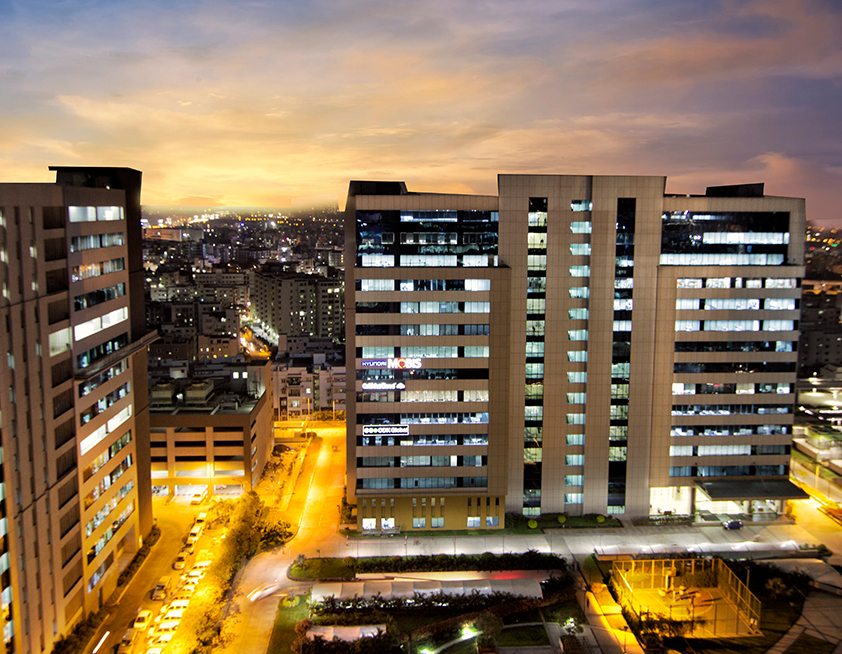
Hyderabad is rapidly solidifying its position as a premier destination for Global Capability Centers, attracting multinational corporations across diverse sectors including IT, pharma, and biotech.3 While Bengaluru currently holds the leading position with the highest concentration of GCCs, Hyderabad is swiftly closing the gap, emerging as India’s second-largest and fastest-growing GCC destination.3 The city is home to 273 GCCs, representing 16% of India’s total, closely trailing Bengaluru’s 487 centers (29%).3 Chennai ranks third with 178 centers, accounting for approximately 11% of India’s GCCs.3
Although Tier-1 cities such as Bangalore, Hyderabad, Chennai, Pune, and Delhi-NCR continue to attract the majority of high-value, large-scale GCCs, there is a discernible trend towards expansion into Tier-2 cities, driven by diversification strategies and the pursuit of lower operational costs.2 Hyderabad’s impressive growth trajectory is a testament to its compelling value proposition within this competitive landscape.
Table 1: GCC Count and Growth Rate: Hyderabad vs. Other Indian Cities (2025 Data)
City | Number of GCCs | Percentage of India’s Total GCCs | Growth Status/Ranking |
Bengaluru | 487 | 29% | Leading hub |
Hyderabad | 273 | 16% | Fastest-growing, 2nd |
NCR | 272 | 16% | Close 3rd |
Mumbai | 207 | – | Significant presence |
Pune | 178 | – | Significant presence |
Chennai | 162 | 11% | 3rd largest by count |
India Total | ~1,700 | 53% of world’s GCCs | Dominant global leader |
Source: 3
Specific Advantages Attracting GCCs to Hyderabad
Hyderabad’s ascent as a premier GCC destination is not coincidental but a result of a confluence of strategic advantages that create a powerful ecosystem for global businesses.
The city boasts a robust talent pool, drawing from top-tier institutions such as IIIT-H, ISB, and IIT-Hyderabad, which collectively produce thousands of engineering, management, and analytics professionals annually. Hyderabad also attracts experienced professionals due to its high livability and cost advantages compared to other major metros.6
In terms of world-class infrastructure, Hyderabad offers modern tech parks like HITEC City, Knowledge City, and Genome Valley, providing state-of-the-art office spaces and excellent connectivity. The Rajiv Gandhi International Airport (RGIA) further enhances its global accessibility, facilitating seamless business operations.6
Cost efficiency is another significant draw. Compared to other Indian metropolitan areas like Bengaluru and Mumbai, Hyderabad presents more affordable real estate and a lower cost of living, making it an economically attractive option for long-term GCC operations.3 This allows companies to optimize their operational expenditures without compromising on quality or talent.
The business-friendly policies and strong government support from the Telangana state government are instrumental in attracting GCCs. Initiatives such as the TS-iPASS single-window clearance system streamline the process, promoting ease of doing business and enabling faster operational setup for new centers. The government offers various incentives, including capital subsidies, land and infrastructure support, SGST reimbursement, power tariff subsidies, and stamp duty reimbursement.6
Hyderabad benefits from a thriving ecosystem where the presence of numerous multinational GCCs, including those of Microsoft, Amazon, Facebook, Novartis, Deloitte, and Qualcomm, fosters a dynamic environment of knowledge-sharing and innovation.6 This concentration of global players creates a synergistic effect where the establishment of major GCCs acts as a magnet. Their presence validates the city’s capabilities, attracts more talent seeking opportunities, drives demand for and investment in infrastructure (including real estate and connectivity), and encourages the government to continue supportive policies. This feedback loop accelerates growth beyond what any single factor could achieve, making Hyderabad a self-reinforcing hub for global capabilities.
Furthermore, Hyderabad has cultivated strong sector-specific ecosystems. It is particularly strong in IT, life sciences, pharma, and Banking, Financial Services, and Insurance (BFSI). For pharma and biotech companies, Hyderabad is often the preferred choice, leveraging its established reputation and specialized infrastructure in these sectors.3 This indicates that Hyderabad is not merely a generic tech hub but has developed specific strengths and integrated environments that make it uniquely appealing to particular industries. This sectoral specialization allows for a more concentrated talent pool, tailored infrastructure, and targeted government support, creating a powerful draw that distinguishes it from other Tier-1 cities and contributes significantly to its rapid growth.
Table 2: Key Factors Attracting GCCs to Hyderabad
Factor Category | Specific Advantages | Supporting Snippet IDs |
Talent Pool | Robust base from premier institutions (IIIT-H, ISB, IIT-H); attracts lateral talent; high STEM graduates. | 6 |
Infrastructure | Modern tech parks (HITEC City, Knowledge City, Genome Valley); world-class office spaces; strong global accessibility via RGIA; ORR & metro. | 6 |
Cost Efficiency | More affordable real estate and cost of living compared to Bengaluru/Mumbai. | 3 |
Government Support | Business-friendly policies (TS-iPASS); single-window clearance; capital subsidies; land/infrastructure support; tax incentives. | 6 |
Ecosystem | Presence of major multinational GCCs (Microsoft, Amazon, Deloitte); fosters knowledge-sharing & innovation. | 6 |
Sector Specialization | Strong in IT, Life Sciences, Pharma, BFSI; often first choice for pharma/biotech. | 3 |

Key Drivers and Sectoral Expansion in Hyderabad
Deep Dive into Talent Availability and Skill Development Initiatives
Hyderabad’s sustained growth as a GCC hub is intrinsically linked to its robust and continuously evolving talent ecosystem. The city’s premier educational institutions, including IIIT-H, ISB, and IIT-Hyderabad, consistently produce a large volume of skilled graduates across STEM disciplines, analytics, and digital transformation, ensuring a steady supply of qualified professionals.6 This strong academic foundation is complemented by proactive industry efforts.
GCCs operating in Hyderabad are not merely consumers of talent; they are significant investors in its development. These centers commit heavily to training and upskilling their workforce, fostering a culture of continuous learning that is essential for meeting the rapidly evolving demands of the technological landscape.13 For instance, companies like GlobalLogic actively forge partnerships with Indian technology universities and colleges through industry-academia programs, specifically designed to train students in GenAI and prepare them for the digital workforce.8 This collaborative approach ensures that the talent pipeline is not only abundant but also equipped with cutting-edge skills. Furthermore, the competitive compensation packages offered by GCCs, with salaries for freshers in AI and Machine Learning (ML)-specific roles being 15-20% higher than those in traditional IT companies, act as a powerful magnet, attracting and retaining top-tier talent within the local economy.13
Robust Infrastructure and Real Estate Development
The burgeoning IT sector in Hyderabad has created a significant ripple effect across its real estate market, driving substantial demand for both residential and commercial properties. This has led to extensive new developments in key areas such as Gachibowli, Madhapur, and Kondapur, which are now bustling with residential activity.16 These neighborhoods offer modern living spaces, including high-rise apartments and gated communities, appealing to the influx of skilled professionals and expatriates due to their proximity to IT hubs, seamless connectivity, and lifestyle amenities.16
On the commercial front, the demand for office spaces, co-working hubs, and retail establishments has soared. Global IT giants like Google, Microsoft, and Amazon have established a strong presence in HITEC City, Gachibowli, and Nanakramguda, fueling an unprecedented need for world-class infrastructure.16 This surge has paved the way for state-of-the-art commercial projects, including Grade-A office spaces with modern facilities. Notable examples include RMZ Spire T110 in HITEC City, recognized for providing futuristic work environments, where Costco is reportedly establishing its presence.11 The proliferation of IT parks and Special Economic Zones (SEZs) in areas like the Financial District and Puppalaguda has further cemented Hyderabad’s status as a global business destination.16 Crucially, major infrastructure projects, such as the Outer Ring Road (ORR) and the metro rail network, have significantly improved connectivity, making even the city’s peripheral neighborhoods easily accessible and positively influencing real estate demand and property values.16
Government Support and Ease of Doing Business
The proactive stance of the Telangana government has been a cornerstone of Hyderabad’s success in attracting Global Capability Centers. Policies like the TS-iPASS single-window clearance system are designed to promote ease of doing business by ensuring time-bound approvals, often within 15 days, and facilitating self-certification-based approvals.6 An online portal further streamlines applications, approvals, and incentive tracking, significantly reducing bureaucratic hurdles for companies.15
Beyond regulatory efficiency, the government offers a comprehensive suite of financial incentives. These include capital investment subsidies of up to 25% for machinery and plants, preferential land allotment in hardware parks with discounts on land and development fees, power tariff subsidies of ₹1.50/unit for five years, and 100% reimbursement on stamp duty for land transactions related to electronics projects.15 Special benefits are also provided to MSME electronics units and women-led enterprises, fostering inclusive growth.15 These robust policies, coupled with initiatives aimed at upskilling the workforce, are strategically designed to propel economic growth across both Tier-1 and Tier-2 cities in Telangana.13 This level of governmental facilitation creates a highly conducive environment for foreign companies to establish and expand their capability centers.
Prominent Sectors Establishing GCCs & Recent Major Announcements
The GCC market in Hyderabad is characterized by rapid expansion across a multitude of industries, reflecting its diversified economic appeal. Information Technology (IT) and IT-enabled Services (ITeS) continue to form the largest segment, comprising nearly half (49%) of all GCCs in India.3
The Banking, Financial Services & Insurance (BFSI) sector is another significant contributor, accounting for 17% of GCCs.3 Companies in this sector are focusing on FinTech innovation, building digital banking platforms, utilizing AI for applications like fraud detection, and ensuring robust compliance frameworks.2 Hyderabad has emerged as a global hub for BFSI innovation, attracting major players like Citizens Financial Group, which established its first GCC in India in Hyderabad in partnership with Cognizant, aiming to create 1,000 high-value jobs by March 2026 and serve as an innovation engine.12
Healthcare & Pharma companies are also heavily investing in Hyderabad, with a strong focus on digital health platforms, patient data analysis, and leading research and development (R&D) for new medicines. Hyderabad is frequently the preferred choice for these sectors due to its established reputation.1 Sanofi, for instance, is investing approximately €400 million to double its workforce to 2,600 by 2026, focusing on drug clinical-trial documentation, data science, and AI-driven pharma systems.6
The Manufacturing & Industrials sector is embracing Industry 4.0, with GCCs focusing on IoT, automation, and embedding AI and digital twin technologies.2 E-commerce & Retail businesses are building enhanced, personalized customer experiences, optimizing supply chain management, and developing new logistics technologies, often with a focus on AI-powered analytics.2
Recent major announcements underscore Hyderabad’s growing strategic importance:
- Costco Wholesale Corporation, the U.S. retail giant, is setting up its first Global Capability Centre in Hyderabad to handle technology and research functions, initially employing 1,000 people and supporting global operations across technology, finance, analytics, and R&D.9 This move signals a significant entry into India’s booming retail tech ecosystem.
- GlobalLogic, a Hitachi Group company, opened a new delivery center in Hyderabad in November 2024, its fourth center launch in nine months, boosting core engineering capabilities across technology, healthcare, automotive, banking, and professional services, with a focus on GenAI training.8
- MassMutual, a U.S. life insurer, established a 1.50 lakh sq. ft. GCC in Hyderabad with an estimated investment of ₹1,000 crore, contributing to the firm’s digital transformation and focusing on application development, quality assurance, and data science.19
These investments, particularly from Fortune 500 companies like McDonald’s, American Airlines, and Eli Lilly, choosing Hyderabad for its talent density, innovation potential, and pro-business environment, signal strong confidence in the city’s infrastructure and ecosystem readiness.11
Table 3: Recent Major GCC Announcements in Hyderabad (2024-2025)
Company | Sector | Key Focus Areas | Initial Job Creation/Growth | Location/Facility (if specified) | Supporting Snippet IDs |
Costco Wholesale Corp | Retail | Technology, Research, Finance, Analytics, R&D, Martech, AI-powered analytics | 1,000 people (initial) | RMZ Spire T110, HITEC City (reportedly) | 9 |
Citizens Financial Group | BFSI | Enterprise tech capabilities, customer experience platforms, data analytics, product innovation | 1,000 techies by March 2026 | Cognizant’s new campus, Hyderabad | 12 |
GlobalLogic (Hitachi Group) | Digital Engineering (Cross-sector) | Core engineering capabilities, digital solutions, content engineering, GenAI training | Boosts existing capabilities | New delivery center, Hyderabad (4th in 9 months) | 8 |
MassMutual | Life Insurance | Digital transformation, application development, support, quality assurance, data science | 300 people (recruited) | Financial District, Hyderabad | 19 |
Second-largest beer producer globally | Manufacturing | Application Development, Cloud Engineering, Cybersecurity, Digital Transformation | – | Hyderabad | 1 |
Economic Impact and Future Outlook of GCCs in Telangana
Contribution to Employment Generation and Skill Enhancement
Global Capability Centers are widely recognized as a foundational element of the Indian economy, having transitioned from their traditional role as back-office operations to powerful hubs for innovation and development.13 This evolution has profound implications for employment generation and skill enhancement across Telangana. GCCs are creating a substantial number of high-value jobs across diverse sectors, including IT, finance, health, and engineering.13 Projections indicate that by 2030, India’s GCCs will employ between 2.5 to 2.8 million professionals, a significant increase from approximately 1.9 million in 2024, fundamentally reshaping the employment landscape.13
The growth of mid-market GCCs alone is expected to generate an additional 40,000 new jobs by the end of 2026, expanding their total workforce to over 260,000.21 These centers offer highly competitive compensation, with freshers in AI and ML-specific roles receiving salaries 15-20% higher than those in traditional IT companies.13 This, coupled with the provision of hybrid work models and clear career advancement prospects, plays a crucial role in retaining skilled professionals within the local economy, preventing brain drain and fostering continuous contribution to regional growth.13 Furthermore, GCCs actively invest in training and upskilling their workforce, cultivating a culture of continuous learning that ensures the talent pool remains adaptable and relevant to future technological demands.13
Impact on Urban Development and Regional GDP
The establishment and expansion of GCCs have significantly stimulated urban development and infrastructure enhancement in cities like Hyderabad. This has manifested in the emergence of best-in-class infrastructure, including modern tech parks, superior transportation networks, and improved public services.13 Such advancements in urban infrastructure, supported by state policies, are proving highly attractive for drawing further investments and talent, creating a virtuous cycle of growth.13
GCCs contribute substantially to Telangana’s economic output. The state’s nominal Gross State Domestic Product (GSDP) for 2023-24 stood at ₹15.2 lakh crore (US180billion),withprojectionsreaching₹1,800,003crore(US210 billion) for 2025-26.22 A significant portion, approximately 54%, of Telangana’s GDP originates from the Hyderabad metropolitan area, with the booming service sector, heavily influenced by GCCs, being a key driver of economic activities and opportunities.14 Telangana has demonstrated impressive per capita income (PCI) growth, exceeding 80% (reaching 85% by 2025 compared to 2014) at constant prices. This indicates a substantial rise in real incomes and a strengthening economy, directly reflecting the economic vitality fueled by sectors like IT and GCCs.14 Collectively, GCCs contribute significantly to India’s overall economic output, with revenues reaching $64.6 billion in 2024 and projected to surpass $100 billion by 2030.9 This income flow into India’s economy boosts the national GDP and stimulates economic activities in the regions surrounding GCCs, including the development of supporting industries such as real estate, retail, and hospitality, creating a powerful multiplier effect across the economy.13
Projections for GCC Growth and Job Creation in India and Hyderabad
The outlook for GCC growth in India and specifically in Hyderabad remains exceptionally positive. India is projected to house over 2,100 GCCs by the financial year 2028, expanding at a Compound Annual Growth Rate (CAGR) of 8%.5 By 2030, the total number of GCCs in India is expected to range between 2,900 and 3,500, with a corresponding employment of 2.5 to 2.8 million professionals.13 Hyderabad is strategically positioned to lead this growth, owing to its compelling combination of a skilled talent pool, robust infrastructure, and proactive state policies.3
Table 4: Projected GCC Growth and Economic Contribution (India/Hyderabad, 2024-2030)
Metric | Current (2024/2025) Value | Projected (2026/2028/2030) Value | Growth Rate (CAGR) | Supporting Snippet IDs |
Total GCCs in India | ~1,700 | >2,100 (by FY28) | 8% (CAGR) | 5 |
GCC Workforce in India | ~1.9 million | 2.5-2.8 million (by 2030) | – | 13 |
GCC Revenue in India | $64.6 billion (2024) | >$100 billion (by 2030) | – | 9 |
Hyderabad’s Share of GCCs | 273 (16% of India’s total) | Leading growth | – | 3 |
Mid-market GCC Jobs (India) | >220,000 | >260,000 (by 2026) | 10-12% (annual hiring) | 21 |
Challenges and Opportunities for Sustained Growth
While Hyderabad’s GCC sector demonstrates remarkable growth, the broader economic landscape of Telangana presents certain challenges. The state government currently faces substantial financial challenges, particularly due to high-interest loans incurred for large-scale irrigation projects. These high interest rates, ranging from 10.75% to 11.25%, are impacting capital expenditures and pose a risk to the state’s credit rating.23 Furthermore, Hyderabad’s residential real estate market experienced a significant slowdown in Q1 2025, with sales plummeting by 45-50% compared to the previous year, indicating buyer uncertainty influenced by escalating property prices and global economic headwinds.24
However, the sustained growth and strategic shift of GCCs in Hyderabad serve as a significant economic buffer against these broader macroeconomic pressures. The continuous influx and expansion of GCCs, with their stable, high-value job creation and substantial contribution to the GSDP, provide a counter-cyclical force against other economic downturns or fiscal strains. The high-value nature of GCC jobs ensures sustained consumer spending and tax revenues even when other sectors might face weaknesses. This positions the GCC sector not merely as a growth driver but also as a key stabilizer for Telangana’s economy, enhancing its overall resilience to external shocks and internal financial challenges.
Opportunities for sustained growth are abundant. The continued government support and investment in critical areas such as infrastructure, education, and digital readiness are paramount.6 The strong emphasis on AI-first approaches and automation within GCCs positions Hyderabad for future-proof growth, aligning with global technological advancements.1 Moreover, the state’s strategic location, skilled workforce, and collaborative innovation ecosystems, including T-Hub and STPI, further bolster its appeal.6 By consistently fostering these strengths and proactively addressing fiscal challenges, Telangana can ensure Hyderabad maintains its trajectory as a leading global capability center hub.
📞 Contact us at support@virtrigo.com to book your free consultation and setup your business from data risks.


