


With the Digital Personal Data Protection (DPDP) Act now in effect, IT companies in Hyderabad must act quickly to align their operations with its data privacy mandates. Failing to comply can result in steep penalties, reputational harm, and loss of client trust. Non-compliance can lead to heavy penalties, damage to brand reputation, and strained client relationships—especially with international partners that prioritize data protection.
This article breaks down five actionable steps that Hyderabad-based IT firms can take to comply with the DPDP Act while enhancing data security and customer trust.
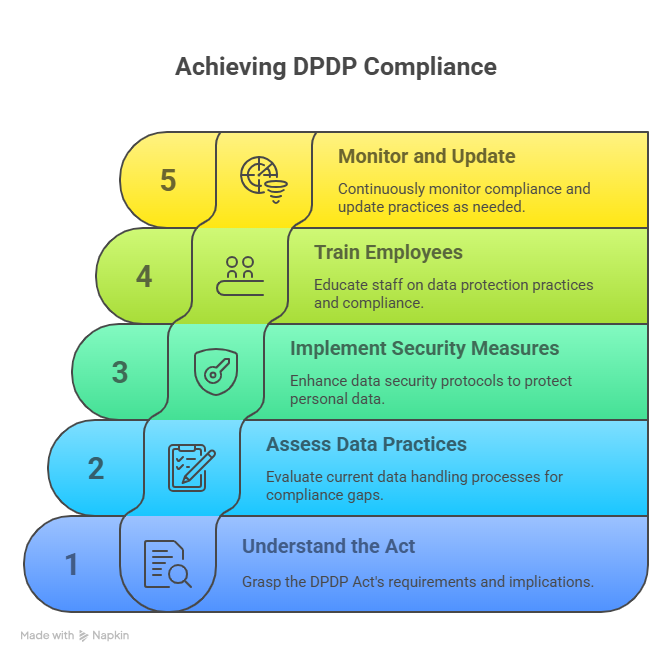
1. What Is the DPDP Act and Why It Matters for IT Companies
The DPDP Act, enacted in August 2023, is India’s landmark data protection law that governs the processing of digital personal data by businesses.
Why IT Companies Are Affected:
- Personal Data Handling: IT firms often process large volumes of client and employee data.
- Global Operations: Many companies manage cross-border data transfers and must comply with international standards.
- Potential Classification as Significant Data Fiduciaries (SDFs): Firms handling sensitive data at scale may have elevated responsibilities.
Key Provisions:
- Consent-driven data processing
- Purpose limitation and data minimization
- Individual rights (access, correction, erasure)
- Mandatory breach reporting
2. Step 1: Conduct a Data Mapping & DPIA (Data Protection Impact Assessment)
Begin your compliance journey by fully understanding your data ecosystem.
Action Points:
- Map Your Data: Identify where personal data is collected, stored, and shared. Use tools like OneTrust or TrustArc, which help automate data discovery, classify personal data, and streamline privacy compliance workflows.
- Classify Data Types: Segregate financial, health, biometric, and children’s data.
- Conduct a DPIA: Analyze risks tied to high-impact processing to identify vulnerabilities and mitigation steps.
Outcome: Greater transparency, risk mitigation, and audit-readiness.
3. Step 2: Appoint a Data Protection Officer (DPO) or Privacy Lead
If your firm is designated an SDF, you must appoint a DPO based in India. Otherwise, a privacy lead should oversee compliance.
Responsibilities:
- Monitor data practices and ensure DPDP compliance
- Liaise with the Data Protection Board of India
- Manage grievance and breach response processes
Pro Tip: Establish a Data Governance Committee to support the DPO and improve accountability.
4. Step 3: Implement Consent Management & Privacy Notices
Under the DPDP Act, consent must be freely given, informed, and specific.
Compliance Essentials:
- Explicit Consent Mechanisms: Use opt-ins with clear purpose statements.
- Multi-Language Notices: Offer privacy notices in India’s 22 official languages.
- Purpose Limitation: Collect only what is necessary and explain why.
Tools & Tips:
- Deploy a Consent Management Platform (CMP)
- Maintain easy-to-access, updated privacy policies
- Use user-friendly cookie banners and preference centers
Result: Transparent data practices that build trust and meet legal requirements.
5. Step 4: Uphold Data Principal Rights & Prepare for Breaches
The DPDP Act grants individuals several rights over their personal data.
Rights to Enable:
- Access: Let users view stored data
- Correction & Erasure: Facilitate edits and deletions
- Grievance Redressal: Implement fast, user-centric resolution channels
- Consent Withdrawal: Allow users to withdraw consent as easily as they gave it
Breach Preparedness:
- Create a breach notification plan with a defined timeline
- Log all processing activities
- Run incident response drills regularly
Tech Stack Suggestion: Use service desks for managing requests and automated workflows for compliance tracking.
6. Step 5: Conduct Audits, Train Teams & Strengthen Security Controls
Compliance is not a one-time task—it’s a continuous process involving systems, people, and culture.
Audit Checklist:
- Regular internal data access reviews
- Third-party audit reports for transparency
- Action plans based on audit outcomes
Employee Education:
- Onboarding sessions for new hires
- Annual training on data privacy policies
- Specialized workshops for tech and support teams
Security Measures:
- Data encryption (at rest & in transit)
- Role-Based Access Controls (RBAC)
- Multi-Factor Authentication (MFA)
- Routine vulnerability scans and patching
Alignment: Follows global standards such as ISO 27001.
Bonus: Turning Compliance Into a Business Differentiator
For Hyderabad’s booming IT and SaaS industry, DPDP compliance offers more than legal security—it creates a competitive edge.
Strategic Benefits:
- Win Global Clients: Meet GDPR-like standards expected by overseas clients
- Faster Contracting: Shorter procurement cycles with preemptive compliance
- Stronger Brand Equity: Enhanced trust and transparency in the market
Promote compliance readiness in sales pitches, RFPs, and investor meetings to accelerate procurement cycles, reduce due diligence friction, and boost client and investor confidence.
Final Thoughts: Your DPDP Compliance Roadmap
As data privacy laws evolve, IT firms in Hyderabad must be proactive, not reactive. Following these five steps will ensure legal readiness, business resilience, and stakeholder confidence.
5 Key Steps Recap:
- Data Mapping & DPIA
- Appoint a DPO or Privacy Lead
- Consent Management & Privacy Notices
- Enable Rights & Manage Breaches
- Audits, Training & Security Controls
🔗 Take Action Now
Want expert help with your compliance journey?
Download our FREE DPDP Act Compliance Checklist for IT companies in Hyderabad or book a 30-minute consultation to kickstart your strategy.
Internal Link Suggestions: – Link to your IT Compliance Services page – Link to “DPDP Act Compliance Checklist” download – Link to a case study or whitepaper (if available)
External Link Suggestions: – MeitY DPDP Act Overview – ISO 27001 Standard Overview


