


Introduction:
As India’s Digital Personal Data Protection (DPDP) Act reshapes the nation’s privacy landscape, IT and software companies must act fast to embed data privacy into their processes. One essential compliance tool? The Data Protection Impact Assessment (DPIA).
Often overlooked or misunderstood, a DPIA isn’t just a box-ticking exercise—it’s your first line of defense against regulatory penalties and reputational damage. In this blog, we’ll explain what a DPIA is, when it’s required under the DPDP Act, and how to carry it out effectively in your organization.

🔍 What Is a Data Protection Impact Assessment (DPIA)?
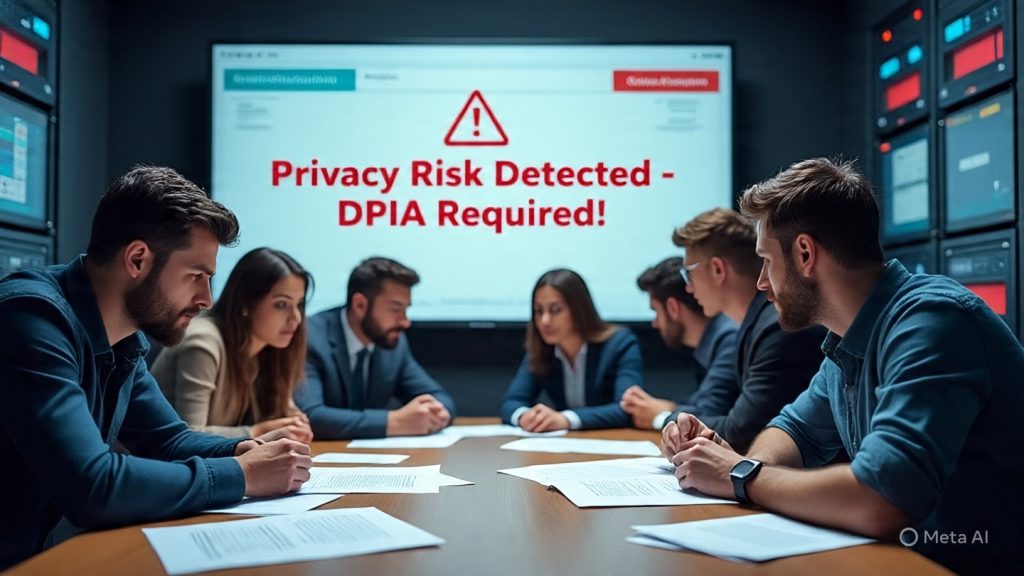
A Data Protection Impact Assessment (DPIA) is a structured risk assessment process designed to evaluate the impact of personal data processing activities on individuals’ privacy. It helps organizations identify, analyze, and minimize data privacy risks before launching a new product, service, or process.
✳️ Why DPIAs Matter for Indian IT & Software Firms:
- The DPDP Act mandates “Data Protection by Design,” making DPIAs integral to compliance.
- DPIAs help build trust with users and regulators alike.
- They serve as documentation to demonstrate accountability during audits.

📜 DPIA Requirements Under the DPDP Act
While the DPDP Act does not prescribe a specific format for DPIAs, it requires all Significant Data Fiduciaries (SDFs) to conduct DPIAs in the following cases:
✅ DPIA Triggers Under the DPDP Act:
- Large-scale processing of sensitive personal data
- Use of new technologies (e.g., AI, facial recognition, behavioral profiling)
- Processing involving vulnerable groups (children, elderly)
- Cross-border data transfers
Note: As of July 2025, final SDF guidelines are expected from the Data Protection Board of India (DPBI), but proactive DPIA adoption is strongly recommended for all tech companies.
🏗️ Key Steps to Conducting a DPIA for DPDP Compliance
- Identify the Processing Activity
Start by clearly defining the scope of data processing:
- What personal data is collected?
- Who is affected?
- Why is the data being processed?
- How is it being stored/shared?
- Assess Necessity & Proportionality
Ask:
- Is the data collection essential for the business purpose?
- Can you minimize the amount of personal data used?
- Are there alternative, less intrusive methods?
- Evaluate Risks to Data Principals
This step analyzes the likelihood and severity of:
- Unauthorized access or data breach
- Misuse of personal data
- Discrimination or harm to individuals
- Implement Risk Mitigation Measures
Define technical and organizational safeguards:
- Encryption
- Access controls
- Data retention limits
- Anonymization or pseudonymization
- Role-based access control (RBAC)
- Document the DPIA
Maintain detailed records of:
- Identified risks
- Chosen safeguards
- Stakeholder feedback
- Approval logs
- Engage with the Data Protection Officer (DPO)
Ensure your DPO reviews and signs off on the DPIA before deployment. In complex cases, the DPBI may require prior consultation.

💡 Practical DPIA Tips for Indian Software Companies
Tip | Description |
🧩 Embed into SDLC | Integrate DPIA into your software development life cycle (SDLC) at the design and testing phases. |
📊 Use Templates | Standardize the DPIA format to ensure consistency across teams. |
🛠️ Leverage Automation | Use privacy management tools like OneTrust, Securiti.ai, or open-source frameworks for DPIA tracking. |
👥 Cross-functional Teams | Involve legal, tech, product, and compliance teams in DPIA reviews. |
🔁 Update Regularly | Reassess DPIAs when major product or process changes occur. |
🖼️ Visual Content Suggestions
- ✅ Infographic: “6 Steps to Conducting a DPIA Under DPDP Act”
- 🛠️ Flowchart: Decision tree for “When Is a DPIA Required?”
- 📈 Bar Graph: Risks identified vs. mitigated from sample DPIA
- 💬 Quote Card: Expert DPO advice or legal interpretation
🧠 Expert Quote
“DPIAs under India’s DPDP Act are not just about regulatory checklists—they’re strategic tools for sustainable, privacy-first product development.”
— Priya Menon, Chief Privacy Officer, DevSecureTech Pvt. Ltd.
📌 Case Example: DPIA in Action (Hyderabad-based SaaS Firm)
A Hyderabad-based CRM SaaS provider conducted a DPIA before launching a new predictive analytics tool. The process helped them:
- Detect overcollection of location data
- Reconfigure APIs to ensure user consent
- Build role-based access control for internal teams
By documenting the DPIA, they avoided future compliance issues and enhanced product credibility with enterprise clients.
📈 SEO Keywords Naturally Integrated
- data protection impact assessment India
- DPIA DPDP Act compliance
- DPIA checklist for software companies
- IT data privacy India
- how to conduct DPIA under DPDP
🔚 Conclusion
The DPDP Act is setting a new bar for data privacy in India, and DPIAs are a critical part of that framework. By embedding DPIAs into your product lifecycle, you ensure not only compliance but also customer trust and operational resilience.
Don’t wait for a regulator’s knock—start your DPIA process today.
🗣️ Call to Action:
Are you already using DPIAs in your software development process? Share your experience or challenges in the comments—we’d love to hear your insights! Or write us at support@virtrigo.com.


