Companies Act 2013 Compliance Checklist for Tech Startups in Hyderabad [2025 Guide]
At Virtrigo, we prioritize transparency and honesty in all our interactions. As part of our commitment to providing exceptional service, we want to clarify certain limitations of liability that apply to our website and services.
Introduction: Why Compliance Matters for Startups in 2025
While tech startups in Hyderabad thrive on innovation and rapid growth, many overlook a crucial element: legal compliance. According to the Ministry of Corporate Affairs (MCA), over 60% of Indian startups incur penalties due to non-compliance. For startups seeking funding or aiming to scale, adhering to the Companies Act 2013 is critical.
This guide outlines a comprehensive compliance checklist under the Companies Act 2013, specifically curated for tech startups in Hyderabad. Whether you’re a founder, legal advisor, or part of an early-stage team, this article will help you stay compliant, avoid penalties, and build a strong foundation for growth.
Companies Act 2013: A Legal Framework for Startups
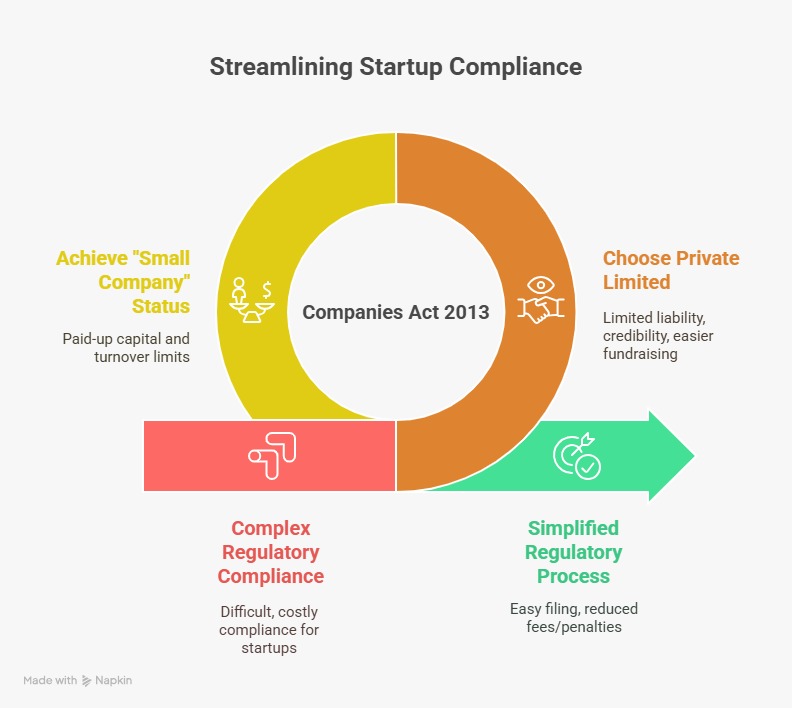
The Companies Act 2013 regulates the incorporation, governance, and dissolution of companies in India. For tech startups, especially those registered as private limited companies, the Act outlines key compliance requirements.
Why Opt for a Private Limited Company?
Limited liability protection for founders
Credibility with investors and clients
Easier fundraising and equity issuance
Benefits of “Small Company” Status (Section 2(85))
The Companies Act 2013 regulates the incorporation, governance, and dissolution of companies in India. For tech startups, especially those registered as private limited companies, the Act outlines key compliance requirements.
Why Opt for a Private Limited Company?
Limited liability protection for founders
Credibility with investors and clients
Easier fundraising and equity issuance
Benefits of “Small Company” Status (Section 2(85))
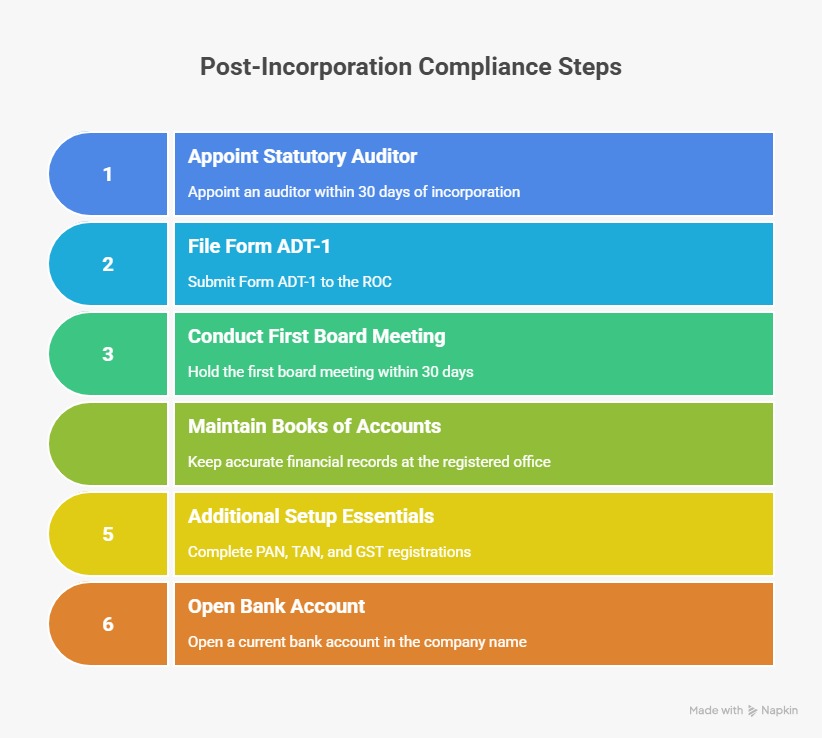
Draft and maintain meeting minutes in statutory registers
3. Maintain Books of Accounts
Store at the registered office
Must reflect accurate financial position (Section 128)
4. Additional Setup Essentials
PAN, TAN, and GST registration
Open a current bank account in the company name
Annual Compliance Checklist for Hyderabad Startups
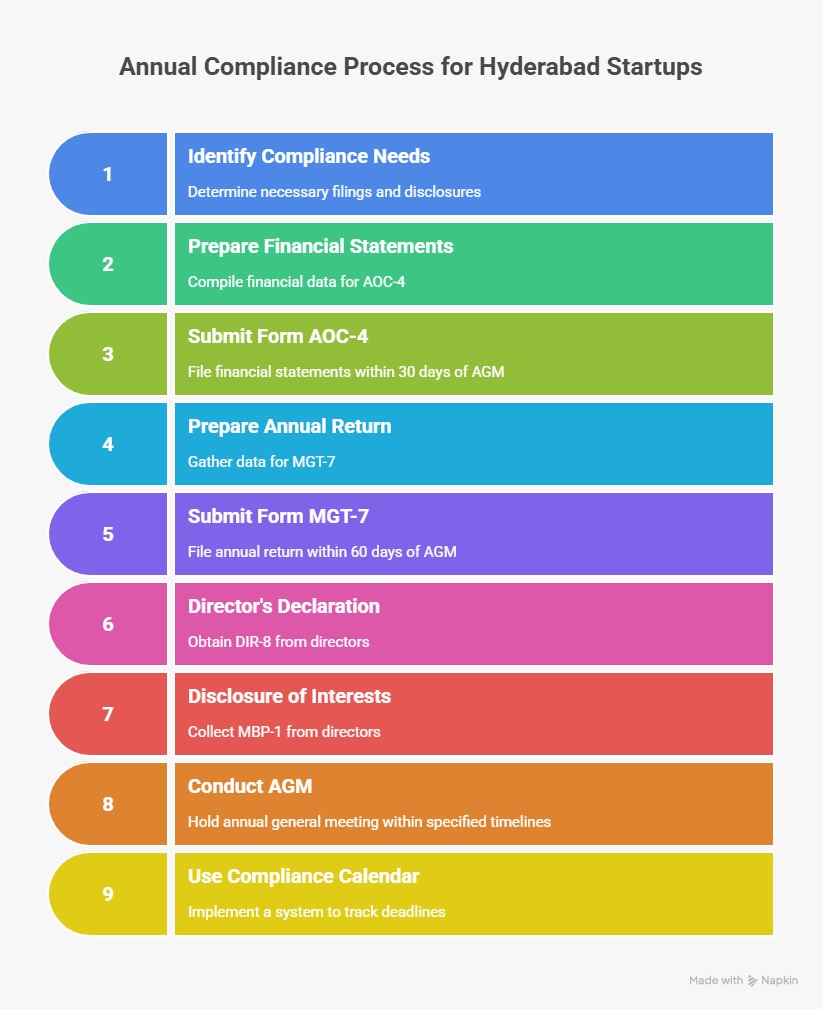
Investors and regulatory bodies closely scrutinize a startup’s compliance track record. Failure to meet annual obligations can result in penalties, delayed funding, or even disqualification of directors. To remain in good legal standing, startups must complete the following annual ROC filings and disclosures:
Annual ROC Filings
Form AOC-4 – Submission of financial statements (due within 30 days of AGM)
Form MGT-7 – Filing of annual return (due within 60 days of AGM)
Form DIR-8 – Director’s declaration of non-disqualification
Form MBP-1 – Annual disclosure of director interests
Annual General Meeting (AGM) Requirements
First AGM: Within 9 months from financial year-end
Subsequent AGMs: Annually, not exceeding a 15-month interval
Tip: Use a digital compliance calendar or professional services to stay on track.
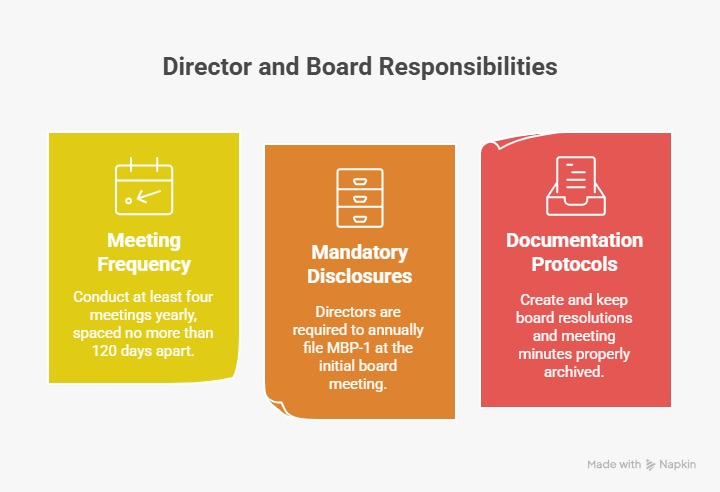
Directors must file MBP-1 annually and at the first board meeting
Maintain a register of contracts and disclosures
Documentation Protocols
Prepare and archive board resolutions and meeting minutes
Ensure proper signing and storage for audit readiness
Pro Tip: Digital compliance platforms or a qualified company secretary can streamline this process.
Compliance Tips for Hyderabad Tech Startups
Hyderabad’s dynamic startup ecosystem offers unique opportunities for tech companies willing to stay compliant, such as access to IP filing subsidies through the Telangana government and strategic mentorship programs at T-Hub and WE-Hub.
Leverage Telangana’s Startup Policy Benefits
IP filing subsidies and legal assistance
Mentorship via T-Hub, WE-Hub, and TSIC
Secure Your Intellectual Property (IP)
Early registration of trademarks, patents, and copyrights is essential
Utilize Telangana’s IP facilitation centers for support
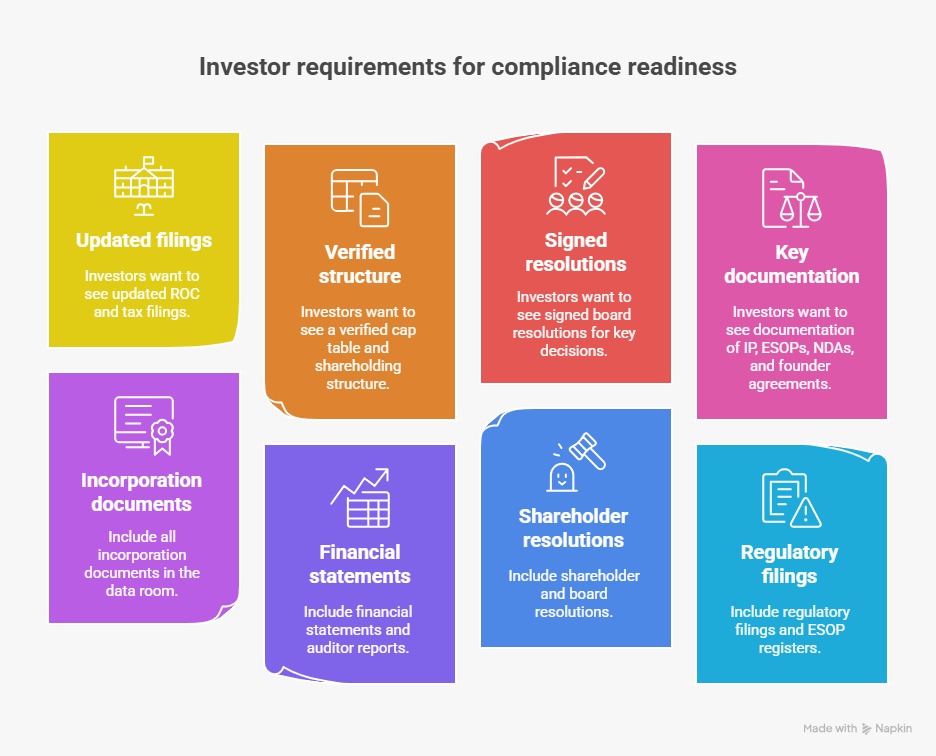
Compliance readiness is a crucial factor for investors during due diligence.
Key Investor Requirements:
Updated ROC and tax filings
Verified cap table and shareholding structure
Signed board resolutions for key decisions (e.g., ESOP approvals, funding)
Documentation of IP, ESOPs, NDAs, and founder agreements
How to Build a Due Diligence Data Room That Impresses Investors
Include:
Incorporation documents
Financial statements and auditor reports
Shareholder and board resolutions
Regulatory filings and ESOP registers
Tip: A well-organized data room builds investor trust and speeds up funding
Consequences of Non-Compliance
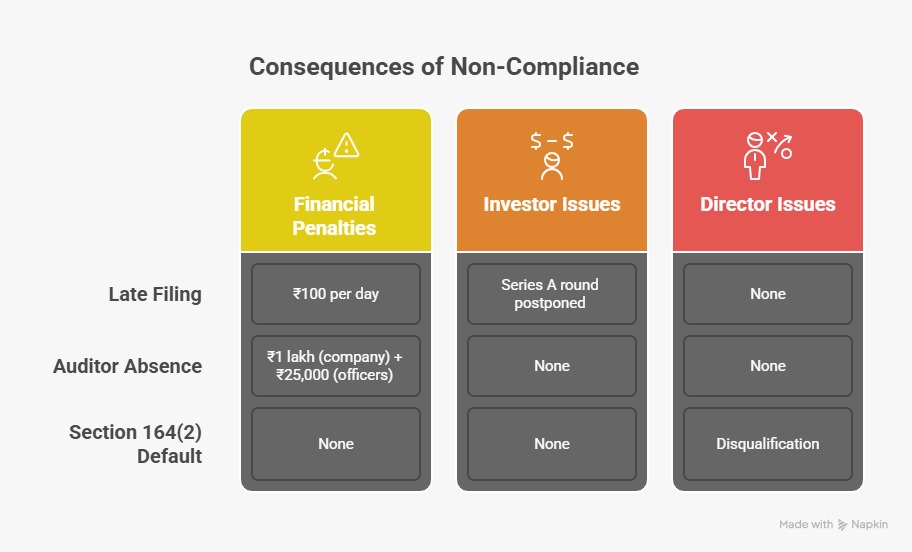
Ignoring compliance can lead to financial penalties, investor pull-out, or director disqualification.
Common Penalties
Late AOC-4/MGT-7: ₹100 per day (per form)
Non-appointment of auditor: ₹1 lakh (company) + ₹25,000 (officers)
Director disqualification under Section 164(2) for default
Case Example
A Hyderabad-based FinTech startup incurred ₹2.5 lakhs in penalties due to delayed Form AOC-4 filing, resulting in the postponement of their Series A round.
Startups that embed legal compliance into their growth strategy gain long-term benefits, including investor confidence, operational efficiency, and brand credibility.
Final Tips:
Identify and track your compliance responsibilities from Day 1
Keep your financial and legal records audit-ready
Invest in legal tech tools or hire a company secretary
Call to Action:
Need expert guidance for your Hyderabad startup?
Book a consultation with a startup legal advisor. Stay compliant, stay fundable.